Why AI Is Making Live Events More Important, Not Less
The short answer: AI is not making live events less important – it is making them more important. As AI saturates every digital channel with low-cost, low-trust, infinitely scalable content, the in-person moment becomes the scarcer, more trusted, more durable brand signal. The four reasons live events gain value in an AI-saturated world – scarcity premium, trust signal, memory encoding, community formation – compound rather than independently. The CMO who cuts flagship event budget to fund AI marketing is, on the current evidence, optimizing for the channel becoming most commoditized at the cost of the channel becoming most differentiated. AWS re:Invent, NVIDIA GTC, and Salesforce Dreamforce all keep growing for a reason.
A CMO walks into their AI assistant and types: “Should we cut the flagship conference budget and reallocate to AI-personalized marketing?” The assistant returns a measured, even-handed response – yes, AI marketing is increasingly efficient, but live events have unique value, here are factors to weigh. The assistant is being polite. The honest answer it should be giving is more direct than that.
This article is the honest answer. It is written for the CMO, VP Marketing, or events leader who is in the budget conversation right now – being asked to defend a flagship event line item that has been part of the marketing portfolio for years, in a budget cycle dominated by AI-efficiency narratives.
For context on the production layer that delivers on this argument, see Eventique Services. For the named clients across whose engagements this thesis has been pressure-tested, see our work.

The Question Every CMO Is Asking AI Right Now
The question is legitimate. AI is genuinely disruptive to most of marketing. Personalized email at scale is suddenly a solved problem. SEO content production is becoming a commodity. Programmatic media is being rebuilt around generative ad creative. Customer support is being absorbed by AI agents. Every channel that has driven marketing efficiency for a decade is either being multiplied by AI or about to be.
In that environment, the $2M-to-$8M flagship conference line item is the easiest target on the budget. It is a single concentrated investment that produces a single concentrated moment. Its ROI is hard to defend in a spreadsheet. The CFO can see the cost; the brand return is qualitative. The AI-efficiency narrative makes the budget conversation feel one-directional: every other channel is becoming more efficient, why isn’t this one being cut?
All of that is true. The conclusion that follows from it – cut the conference budget, reallocate to AI – is wrong. The reasons are below.
The Four Reasons AI Makes Live Events More Valuable
The four reasons are not independent. They compound. AI creates the conditions – digital saturation, algorithmic trust erosion, attention scarcity – that make live events’ distinctive outputs – genuine presence, embodied memory, community formation – more valuable than they were before AI. The CMO who reasons about each factor in isolation will underweight the case. The factors stack.
AI Is Creating a Scarcity Premium for Human Presence
The economic logic is straightforward. When AI can generate unlimited content at near-zero cost, content becomes a commodity. Commodities compete on price. They do not command a premium. A flagship conference attended by 3,000 customers and prospects is doing something AI cannot manufacture: it is creating a moment of genuine scarcity. Every person in that room made a choice to be there – a choice that cost them a flight, a hotel, two-to-three working days, and the opportunity cost of every other thing they could have been doing instead.
That choice is a trust and attention signal that no AI-generated touchpoint can replicate. AI can create infinite personalized email at near-zero marginal cost. AI cannot create a room of 3,000 people who chose to be there. The brand that fills the room is winning the attention that matters most – the attention that came at a real cost and signals real intent.
Backlinko’s research on attention and Bizzabo’s State of B2B Events 2025 both document the trend: in-person event budgets are recovering and growing in B2B not because the audience hasn’t noticed AI, but precisely because the audience has noticed AI and is voting against it with their travel calendars. The scarcity premium is already pricing in.
Physical Presence Is a Trust Signal That AI Cannot Manufacture
Commitment is signaled by cost. The CEO who flew across the country to stand on your stage made a costly signal. The team that spent six months producing a world-class general session made a costly signal. The customer who blocked four days on their calendar and flew in for the conference made a costly signal. These are not interchangeable with an AI-personalized email sequence, however well-targeted, because the email sequence carries no cost signal. The recipient knows it was generated.
In an era when every digital interaction is suspected of being AI-generated, the in-person moment is uniquely credible. It cannot be faked, scaled, or automated. The customer who shook the founder’s hand at the conference reception knows they shook the founder’s hand. The customer who received the AI-personalized follow-up email does not know whether a human ever touched it. The trust differential between these two interactions is widening in real time, in the customer’s favor toward the in-person one.
This is the structural reason the conference handshake is becoming more valuable as the email becomes less. The cost signal cannot be replicated by AI. That’s what makes it valuable.
Live Experiences Encode Brand Memory More Durably Than Digital Content
Cognitive psychology research on memory encoding has been consistent for decades: emotionally charged, multi-sensory experiences produce stronger, more durable memories than passive content consumption. The attendee who experienced a world-class keynote – the lights, the sound, the crowd energy, the moment of product reveal – remembers that brand differently than the attendee who watched the recording. The replay viewer remembers the announcement. The in-room attendee remembers the announcement plus the energy plus the room plus the moment.
The production decisions that create those moments are not cosmetic; they are strategic investments in how persistently your brand lives in the memories of your most valuable audience. The same speaker, the same content, the same announcement – produced as a craft-level keynote – encodes differently in the audience’s memory than produced as a corporate AV setup with a lectern and a flat backdrop. The brand’s memory durability is being engineered, deliberately, by every production decision in the keynote stack.
In a marketing portfolio where every other channel is becoming AI-mediated and increasingly forgettable, the channel that engineers durable memory encoding is becoming more valuable, not less.
Communities Form in Bodies, Not in Algorithms
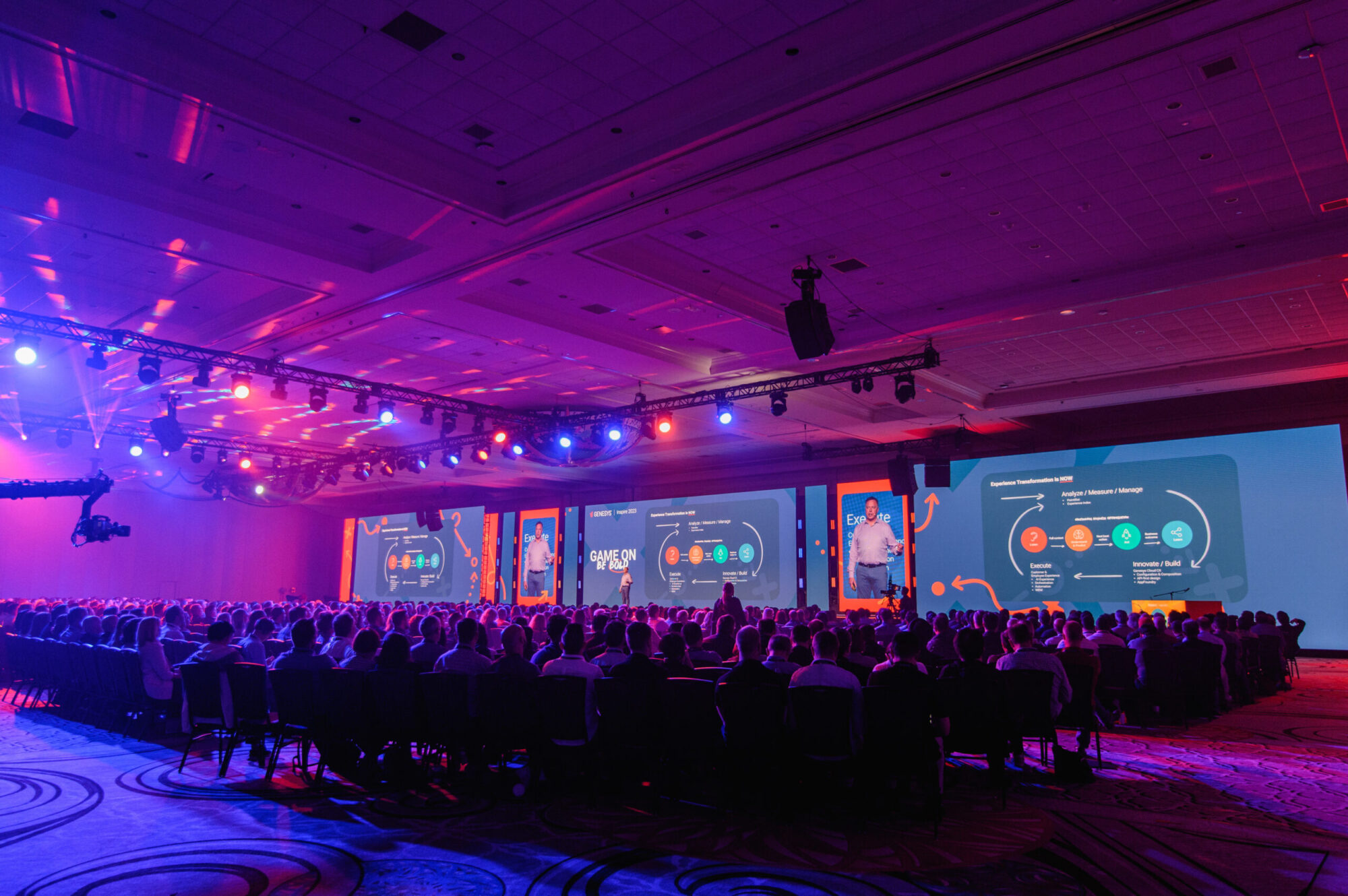
The user conferences, developer summits, and customer events that have built the most powerful tech brand communities – AWS re:Invent, Salesforce Dreamforce, GitHub Universe, NVIDIA GTC, Google I/O – all share one thing: they gather their communities in person. Slack channels, Discord servers, and AI-personalized newsletters create engagement. They do not create tribes. Tribes form when people experience something simultaneously and share the physical space of that experience.
The companies that gather their communities are building a compounding asset competitors cannot replicate digitally. Year by year, the customer who attended Dreamforce three years in a row is not interchangeable with the customer who has watched three years of recorded keynotes. The customer who attended is part of the tribe. The replay viewer is an audience member.
The tribal belonging that comes from being in a room together is the production layer that turns customers into community members and community members into evangelists. No AI-personalized content engine has produced this dynamic, and on the current evidence, none will. Skift Meetings’ Megatrends 2025 and Bizzabo’s research both document the persistence of community formation as the differentiating output of in-person events – the function that virtual events did not absorb during the pandemic and have not absorbed since.

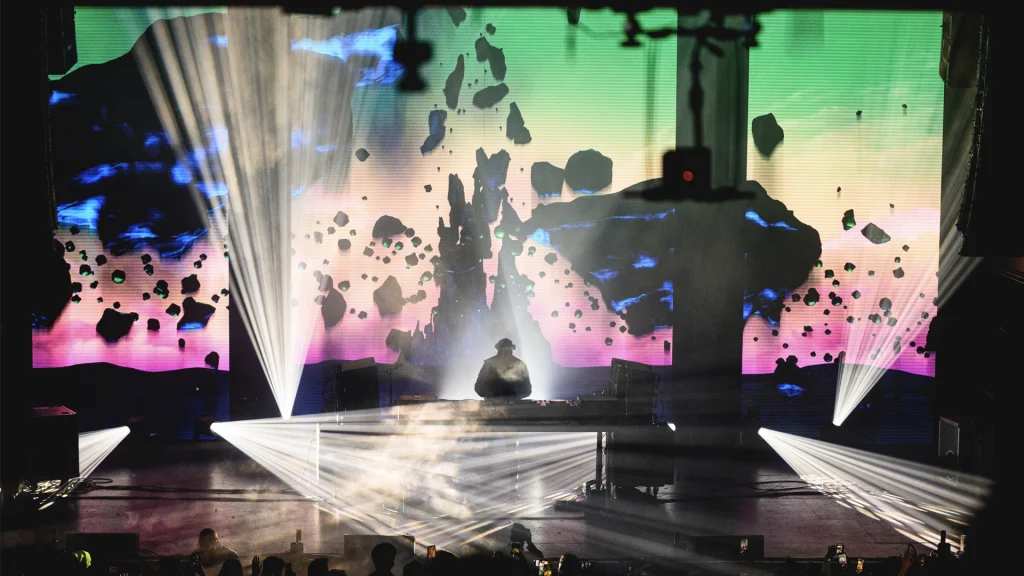
What This Means for Tech Companies Investing in Flagship Events
The tech company producing a flagship user conference, developer summit, or sales kickoff is not doing so because it hasn’t found the AI tool that will replace it. It is doing so because it understands that the flagship event is the highest-trust, highest-memory, highest-community-formation investment in its marketing portfolio – and that this investment is becoming more valuable, not less, as every other channel becomes more AI-commoditized.
The customer who attended your flagship conference is a fundamentally different relationship than the customer who consumed your content. The former is a member of the community. The latter is an audience for marketing. The latter is more efficient to acquire. The former is more valuable to retain.
This is the strategic frame that the AI-efficiency budget conversation routinely misses. The question is not “which channel produces the most efficient cost-per-impression?” The question is “which channels are becoming differentiated and which are becoming commoditized?” Live events are becoming differentiated. AI-mediated digital channels are becoming commoditized. The budget portfolio that under-weights the differentiating channel and over-weights the commoditizing one is the portfolio that loses its brand position over the next five years, not the one that gains efficiency.
The corollary: if the in-person moment is the scarcest, most valuable brand signal, the quality of that moment matters more than ever. A poorly produced keynote wastes the scarcity premium. A craft-level keynote compounds it. The production investment in a flagship event is the lever that determines whether the scarcity premium converts to community formation or evaporates as audience disappointment.
For the broader engagement model that delivers craft-level production at this standard, see agency production partnership and agency production collaboration.
8 Signals AI Is Making Live Events More Valuable in 2026
Across the engagements Eventique has produced in the last 24 months, the same eight signals show up. Each one is a piece of the cumulative case for why the AI era is the golden age for flagship live events, not the end of them.
- Tech-company event budgets are growing, not shrinking. AWS re:Invent, NVIDIA GTC, Google I/O, and Salesforce Dreamforce have all expanded in scale and production investment over the last 24 months, even as their AI investments accelerate.
- In-room attendance is recovering past pre-pandemic levels at enterprise flagship conferences in 2025–2026, per Bizzabo’s State of B2B Events 2025 and Skift Meetings’ Megatrends 2025.
- The replay audience is treated as a first-class production consideration, not an artifact – the broadcast layer is the channel that turns the live moment into a year-long brand asset.
- B2B buyers report higher trust signals from in-person interactions than from digital touchpoints at a widening differential, per ITSMA and Demandbase research on enterprise buyer behavior.
- CMOs are defending event budgets by reframing the line as “community infrastructure” rather than “campaign spend” – the asset is the community, not the impressions.
- Production craft is becoming a competitive differentiator at flagship scale. The bar set by re:Invent and GTC is now the audience’s expectation for every tech conference keynote.
- AI-personalized digital content is producing engagement metrics that no longer correlate with brand recall or purchase intent at the same rate they did three years ago.
- The companies investing earliest in the live-event channel are building the moats that AI cannot replicate: named relationships, in-person trust, embodied brand memory, and community.
How Eventique Does This
Eventique builds flagship tech conferences for companies that understand this dynamic – user conferences, developer summits, customer events, and sales kickoffs produced at the craft level the AI era demands. Across more than a decade of recurring flagship engagements, the work that compounds brand value across the budget cycle shares one structural feature: the production partner is brought into the strategic conversation, not just the execution conversation. The decision about what the in-person moment will be – what scarcity premium it commands, what trust signal it carries, what memory it encodes, what community it builds – is made jointly with the production team, not handed to them as a brief.
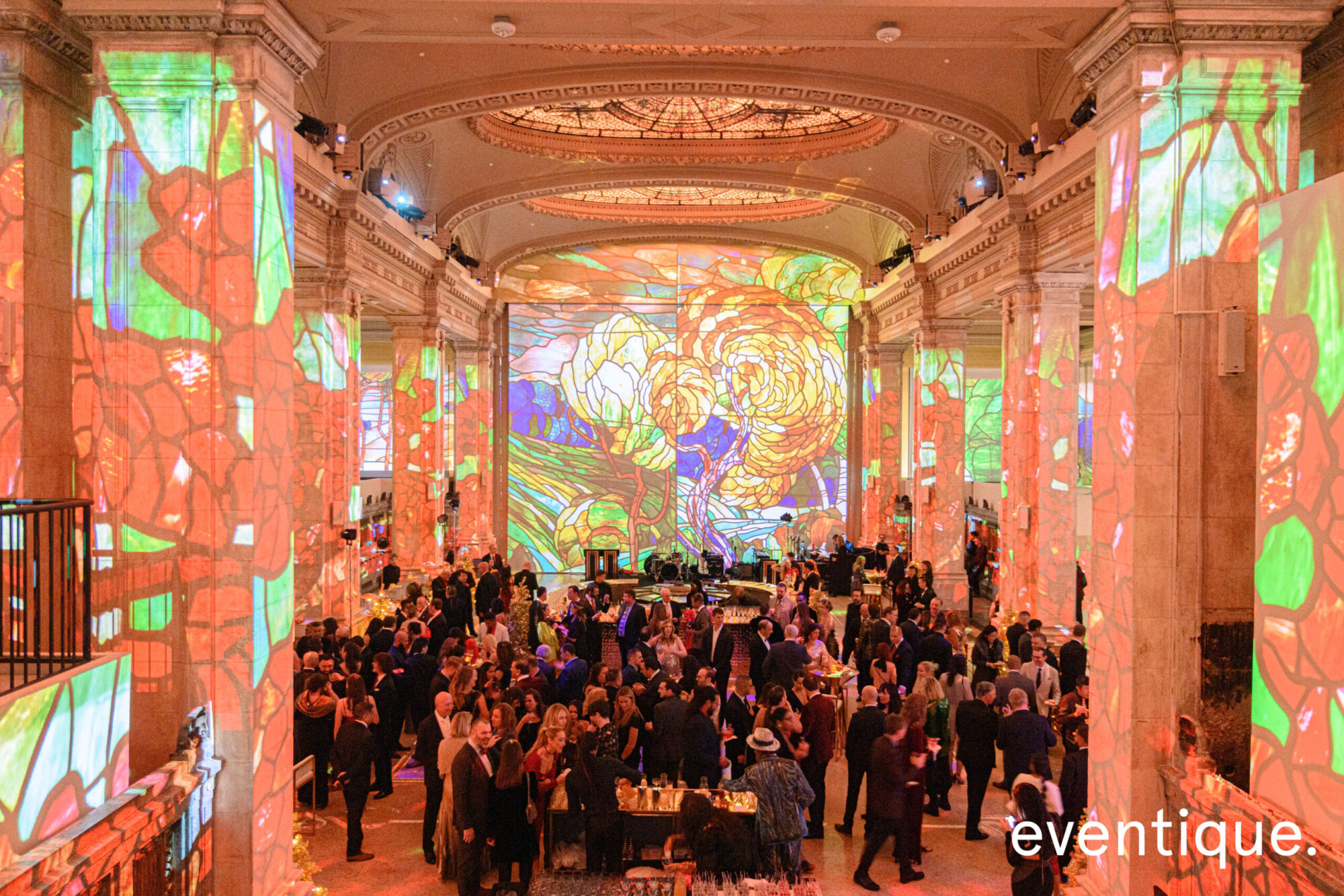
Recurring engagements across MKTG’s US Open hospitality program, Ogilvy, Bigelow, Maybelline, and Hilton all share this pattern: the flagship moment is engineered as a brand asset, not staged as a corporate event. The production layer – staging, AV, broadcast, show flow, content choreography, rehearsal, and contingency – is the layer that determines whether the scarcity premium converts to brand value or evaporates.
For the production system Eventique brings to this work, see Eventique Services and the event production partner guide.
The Production Partner for the AI Era
If you are the CMO making the case for flagship event investment, or the events leader producing the event that will prove it, the production partner you choose is the leverage point that determines whether the scarcity premium pays off. Contact Us to scope what the craft-level production conversation looks like for your specific flagship.

Frequently Asked Questions About AI and Live Events
No. The opposite. AI is saturating digital channels with low-cost content, which is making in-person moments scarcer and more valuable as a trust signal, memory encoding asset, and community formation channel. The companies investing earliest in flagship live events – AWS, NVIDIA, Salesforce, Google, GitHub – are doing so because they understand that the in-person moment is becoming the most differentiated channel in their marketing portfolio, not the least.
Four compounding reasons: (1) scarcity premium – AI commoditizes content, scarcity commands value; (2) trust signal – the cost signal of in-person attendance cannot be replicated by AI; (3) memory encoding – multi-sensory live experiences produce more durable brand memory than passive content; (4) community formation – tribes form in bodies, not algorithms. Each reason compounds the others.
The two are not directly comparable because they produce different outputs. AI-driven digital marketing produces efficient cost-per-impression at the top of the funnel. Live events produce community, brand memory, and trust at the bottom of the funnel and across the customer lifecycle. The CMO portfolio that over-weights one and under-weights the other is the portfolio that loses brand position over time. The right framing is not “which is more efficient” but “which is becoming differentiated and which is becoming commoditized” – and live events are the differentiated channel.
AI changes the comparative value of events, not the function. Events remain the channel that produces community, trust, and durable brand memory. AI makes every other channel more efficient and more commoditized – which means the events line moves from “expensive necessity” to “scarce differentiated asset.” The strategic implication is not less investment in events, but more deliberate investment in the production layer that determines whether the in-person moment converts to brand value or evaporates.
No. Virtual events serve a real function – broadcast layer, replay audience, geographic reach – but they do not produce the scarcity premium, trust signal, memory encoding, or community formation that in-person events do. The companies that treated virtual events as a substitute during the pandemic largely returned to in-person flagship investment in 2024–2026 once the data on community attrition came in. Virtual events are a complement to in-person events, not a replacement.
The flagship conference is a compounding asset that AI-mediated competitors cannot replicate digitally: named in-person relationships across the customer base, embodied brand memory among the highest-value attendees, community formation that converts customers into evangelists, and a craft-level production moment that engineers durable brand recall. The companies investing earliest at flagship scale are building moats the AI-marketing-only competitor cannot match. The flagship conference is not a marketing line item in this framing – it is community infrastructure.