
Design & Creative Conference Activations
The short version: A brand stands out at a design or creative conference through a produced activation – an immersive installation, a story-led sponsorship, or a community moment – not a booth. The audience is creative directors, designers, and brand leaders who judge craft for a living, so the activation has to clear a higher bar and convert that attention into a qualified pipeline. This guide covers how brands create impact at design and creative conferences, the conferences worth targeting, and how to turn a sponsorship into leads.
At a design or creative conference, the audience judges craft for a living – which raises the bar on anything a brand puts in front of them. It also raises the payoff: in Bizzabo’s 2026 State of Events Benchmark Report, 71% of attendees said in-person events are the most effective way to learn about a new product, and 78% of organizers rated in-person experiences their most impactful marketing channel. For a brand courting a creative audience, a produced activation is the highest-leverage way to earn that attention.
The mistake brands make is treating a design conference like a trade show – renting a booth and staffing it. A creative audience reads that as effort without craft. The brands that win build an activation the audience wants to photograph, share, and remember. This guide covers how, which conferences to target, and how to convert the attention into pipeline.
For Eventique’s engagement model, Eventique Services is the starting point, and our work shows the production standard we hold.

What “Standing Out” at a Design or Creative Conference Actually Means
Standing out is not the biggest booth or the loudest signage. In front of a creative audience, it is craft – an environment and a moment designed to the standard the audience holds itself to. The goal is not impressions; it is a memorable, shareable experience that earns a conversation and a follow-up.
That reframes the brief. The question is not “how big is our booth” but “what is the one moment attendees will photograph and talk about,” and “how does that moment capture a qualified lead.” Everything else is production in service of those two answers.
How Brands Create Impact at Design & Creative Conferences
Three activation types carry the most weight with a creative audience.
Immersive installations and interactive exhibits
A designed environment – motion displays, digital art, a sculptural build, an interactive exhibit – is what a creative audience stops for. The craft of the installation is the message: it signals the brand takes design as seriously as the audience does.
Story-led sponsorships and creative thought leadership
A sponsorship earns credibility when it carries a story, not a logo. Curated panels, keynote moments, and content that advances the craft position a brand as a peer to the audience rather than a vendor to it.
Community-centered engagement
Portfolio reviews, workshops, meetups, and networking lounges give a creative audience a reason to spend time with a brand. Community moments convert attention into relationships, and relationships into pipelines.
Design & Creative Conferences Worth Targeting
The design and creative calendar spans several audiences. Brands target conferences like the AIGA Design Conference (the design profession’s flagship), Adobe MAX (the creativity conference), and Config by Figma (the product-design community), alongside branding summits, UX conferences, and creative-leadership events.
The right target depends on the audience the brand needs – designers, creative directors, or the marketing leaders who hire them – and the format, from an intimate summit to a large-scale expo. The activation is built for that specific audience, not a generic “creative” crowd.
Passive Booth vs. Produced Activation
The difference between a booth and an activation is the difference between renting space and producing a moment. Use the comparison below.
| Dimension | Passive booth | Produced activation |
| What it is | Rented space, signage, staff | A designed environment and a designed moment |
| Audience read | Effort without craft | Craft the audience respects |
| Engagement | Foot traffic | A reason to stop, photograph, and share |
| Lead capture | Badge scans | A moment built to capture qualified intent |
| Afterlife | Ends at teardown | Content and relationships that outlast the show |
The row that matters most is the afterlife. A booth ends at teardown; a produced activation generates content and relationships that keep working after the conference.
Eight Ways Brands Win Pipeline at a Creative Conference
The activations that convert share a set of moves. Build for these.
- 1. Design one signature moment the audience will photograph, not ten small touchpoints.
- 2. Build the environment to the audience’s craft standard – a creative crowd reads shortcuts instantly.
- 3. Carry a story, not a logo – a story-led sponsorship earns credibility a banner cannot.
- 4. Give the audience something to do – a workshop, a portfolio review, a make-it moment.
- 5. Engineer the shareable frame – design the moment to travel on social, not just live in the room.
- 6. Capture intent, not just badges – build lead capture into the experience, consent-aware.
- 7. Program a thought-leadership moment – a panel or keynote that advances the craft.
- 8. Plan the follow-up before the show – the pipeline is won in the week after, not the day of.
The first move decides the rest. One designed signature moment outperforms a scatter of small touchpoints with a creative audience every time.
How Eventique Designs Conference Activations
Eventique produces brand activations and creative-industry events built for audiences that judge craft – the exact standard a design or creative conference demands.
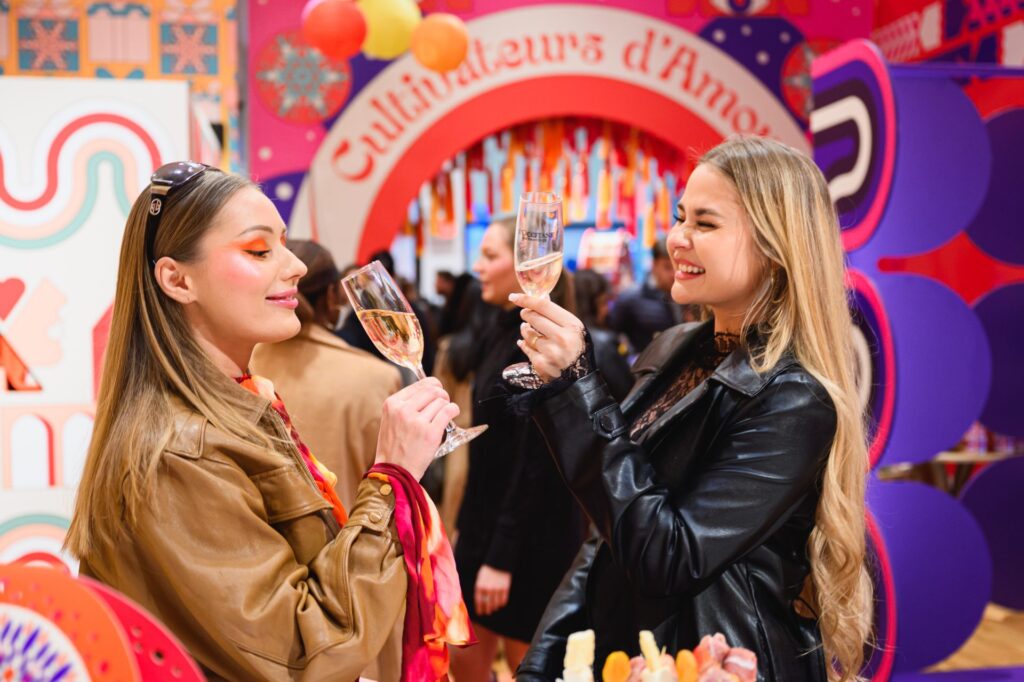
The creative-industry stage. Eventique was the creative and full-production partner for The One Club for Creativity’s 50th anniversary of The One Show – one of advertising’s most prestigious awards – at the Hammerstein Ballroom, welcoming 600-plus executives, creatives, and industry VIPs into an immersive pop-up tracing fifty years of the craft with decade-by-decade vignettes and real campaigns.
The activation at a cultural moment. For Galderma, through its agency Real Chemistry, Eventique designed and built a 600-square-foot activation at the SCOPE Art Show during Art Basel Miami – a single branded environment uniting three brands, with a signature latte-art bar and a large-scale custom yarn installation by street artist HOTTEA tracing the booth perimeter. A branded moment built to hold its own inside an art fair.
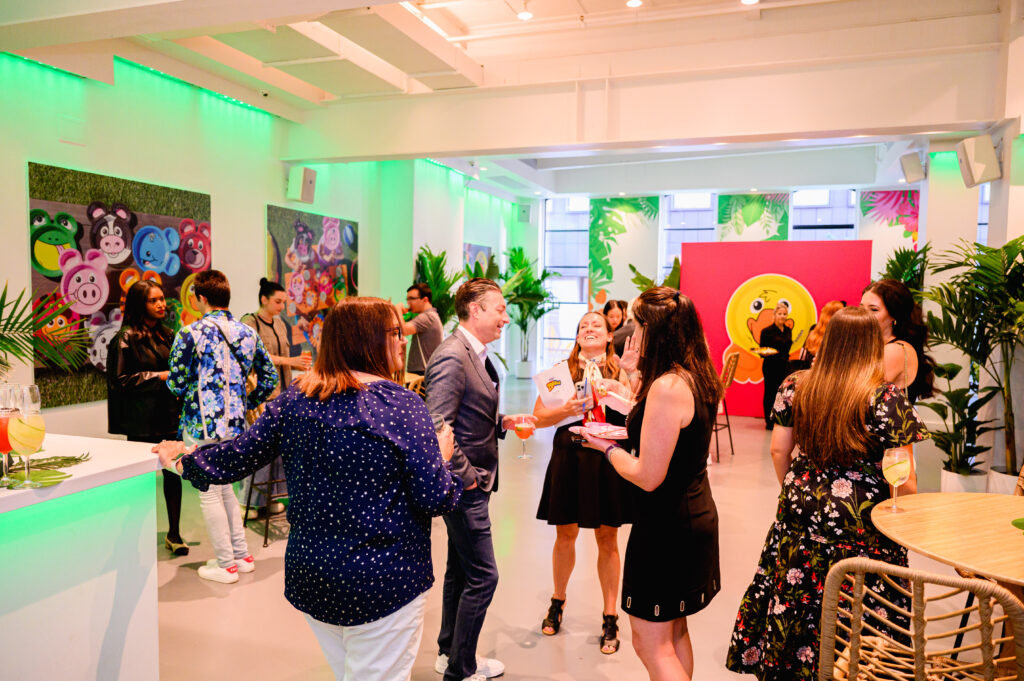
The brand launch built to share. Eventique produced immersive, share-first launches for creative-forward brands – a peony-and-collagen “pink world” for Laneige’s Sydney Sweeney-fronted mask launch, an Instagram-streamed activation for the Polaroid POP camera at a Hudson Yards loft, and a “path to wisdom” laboratory set for philosophy’s eye-cream launch. Each was engineered around a signature, photographable moment.
The through-line is a craft the audience respects and a moment built to travel. For the broader model, see conference management services and the event production partner guide.
Turning a Sponsorship Into Pipeline
The measure of a conference activation is not foot traffic; it is qualified pipeline. A produced activation instruments three things: intent capture built into the experience (consent-aware, tied to CRM), the shareable content that extends reach past the room, and a follow-up plan set before the show. The reason production quality drives the number is direct – a moment the audience wants to engage with produces qualified conversations, and a booth they walk past produces badge scans.
Plan Your Conference Activation
If you are planning a presence at a design or creative conference, the conversation begins with the audience you need, the moment you want to own, and the pipeline you need it to produce. Contact Us to scope it with Eventique’s production team, and see our work for the production standard we hold.
Frequently Asked Questions
By producing an activation, not renting a booth. A creative audience judges craft for a living, so the brands that stand out build an immersive installation, a story-led sponsorship, or a community moment designed to the standard the audience holds itself to. The goal is one signature, photographable moment that earns attention and captures qualified intent – not a scatter of small touchpoints.
It is worth it when the sponsorship is produced for pipeline rather than logo placement. A sponsorship that carries a story, gives the audience something to do, and builds lead capture into the experience produces qualified conversations and content that outlasts the show. A logo on a banner does not. The ROI is in the production, not the placement.
A booth is rented space with signage and staff; an activation is a designed environment and a designed moment. To a creative audience, a booth reads as effort without craft, while an activation reads as craft they respect. The decisive difference is afterlife – a booth ends at teardown, and an activation generates content and relationships that keep working after the conference.
Target the conference that reaches the specific audience you need – designers, creative directors, or the marketing leaders who hire them. Flagship options include the AIGA Design Conference, Adobe MAX, and Config by Figma, alongside branding summits, UX conferences, and creative-leadership events. The activation is then built for that audience and format, from an intimate summit to a large-scale expo.
Build capture into the experience rather than bolting it on. A produced activation gives attendees a reason to engage – a workshop, a portfolio review, an interactive moment – and captures intent at that moment, consent-aware and tied to CRM, with a follow-up plan set before the show. The pipeline is won in the week after the conference, and it depends on planning the capture and the follow-up before load-in.
On qualified pipeline, not foot traffic: the intent captured and tracked to CRM, the shareable content and reach the moment generated, and the conversations that converted to opportunities. Production quality drives the number because a moment the audience wants to engage with produces qualified leads, while a booth they walk past produces badge scans.